Monday, August 26, 2013


Thursday, July 18, 2013
Dental care
Saturday, June 15, 2013
Monday, April 15, 2013
Tuesday, January 29, 2013
Friday, March 30, 2012
Wednesday, June 22, 2011
Tuesday, May 17, 2011
Newspaper
Monday, May 09, 2011
Friday, April 29, 2011
Physical exam
"HEEN: WNL, could use a shave"
(HEEN=Head,Ears, Eyes,Nose; WNL=Within Normal Limits)
Monday, April 25, 2011
Surgical Plan
Out of the room by noon, without a balloon
(Referring to the Intra-Aortic Balloon Pump - a device inserted through the femoral artery into the descending thoracic aorta, used to augment cardiac output and help a person with poor heart function come off of the cardiopulmonary bypass pump)
Wednesday, April 20, 2011
Tuesday, April 12, 2011
Paging system down
Saturday, April 02, 2011
heart trouble/car trouble
(it's going to be a long day)
Wednesday, May 05, 2010
Monday Morning
Tuesday, April 27, 2010
Truth from patients
Saturday, June 13, 2009
weekend call
Sunday, May 10, 2009
Gall bladder
The resident came up to me a few minutes later and told me there was an "issue". The history has looked unremarkable and was wondering what I had missed.
Apparently the patient wanted to take her gallbladder home with her as was getting visibly upset when the surgery resident told her that wasn't the usual procedure.
Now I'm wondering why someone would want to take a nasty old gallbladder home...yuk.
I think the gallbladder usually gets sent to pathology after these surgeries. I can only guess what they're looking for but 1)they're checking that you actually took out a gallbladder and not something else 2)possibly looking for cancer in the gallbladder... i'm not sure but that seems reasonable to me.
"I think she's gonna walk" said the surgery resident after 10 minutes of talking to the patient "I need to talk to the attending surgeon"
Apparently the patient wanted to bury the gallbladder in the backyard as some sort of spiritual closure from having it removed from her body... not too unreasonable if that's what you believe in.
The attending surgeon came down and sorted it all out.... She was not going home with her gallbladder... and she wasn't walking out.
Wednesday, February 04, 2009
Busy morning
She's in the intensive care unit and will be a transport to the OR. I'm there a few minutes early (as I try to do, but don't always succeed) I meet my resident in the ICU and he tells me the case is on hold.
"Why?" I ask.
Apparently there are two LVADs scheduled for that day, which is pretty rare. They do have two sets of surgical instruments, but there's a particular wrench which they use to tighten certain components of the device. They only have one of those wrenches. They don't want to start the case unless they make sure they have everything they need for the surgery. Of course the OTHER room has already started.
I'm more than a little annoyed... both cases have the potential for lasting most of the day... so a delayed start is less than optimal. Both cases had been scheduled since the day before, so you think that it would have occurred to someone to deal with the problem before it was an issue.
The charge nurse was in the process of contacting the representative from the device manufacturer to see if he could bring the extra wrench.
A few minutes later, they said we could go ahead. The two surgeons agreed that whomever was to the stage that needed the wrench first would get to use it first. Then they would quickly clean and resterilize it so the other could use it.
Not the best solution, but workable I guess.
In the meantime, the representative from the company was able to get there in time with extra tools so that there was actually no issue. Still much unnecessary stress for me though.
Saturday, January 31, 2009
are you busy?
"Are you busy?" Fateful last words "Are you covering the recovery room?"
No cases have come out into recovery room yet, "I'm not covering, but you need help with something?"
"Can you come over and look at one of our perioperative techs? She's having some chest pain? We're going to hook her up to the monitors... could you look at her EKG?"
They bring her over to a recovery slot, hook her up to monitors, everything looks okay, vital signs stable.... I take one of the residents over with me... we start getting some history.
Family history of vascular disease... pain started this morning while she was moving things around in the OR... yes I've had his before... not as bad as this time... it's always gone away.... just a little short of breath... just a little sweaty....
She looks fine to me, but the story is a little suspicious for having heart disease... soon my resident and I are wheeling her over to the ER... just to be sure.
Of course she qualifies for chest pain protocol.... they want to "rule her out" (2 sets of EKGs and blood tests 8 hours apart to see if there's heart damage) and probably watch her overnight maybe a stress test in the morning...
Never a dull moment.
Saturday, December 20, 2008
consent
To assure that we don't miss this there are brightly colored signs at the patient bedside that scream "NO CONSENT"
I walk up to the patient and there are these NO CONSENT signs everywhere, so I start flipping through the paperwork after I introduce myself. I see a signed consent form..,
I'm surprised a bit, because the surgeons are still in the OR as far as I know someone else from the team would have had to come out to take care of the it.
The Preop nurse is starting an IV, "I see someone came down and consented the patient"
"No, she filled it out herself."
???
Apparently the patient is a recovery room nurse at another medical facility, saw the paperwork and just started filling it out herself.
Not necessarily great in a medicolegal sense, but mildly amusing to me.
Monday, November 24, 2008
platelet shortage
This is a reminder that Thanksgiving is next week. We anticipate severe platelet shortages for the first week of December. Platelet availability will be VERY tight December 1-4. Monday and Tuesday will be the worst days since there will be virtually no blood donations Thursday-Sunday. If you have elective surgeries with high anticipated platelet needs, I would recommend rescheduling for the following week.
I guess I never thought of that, but it makes sense.
Platelet availability is dependent on recent (last 4-5 day) platelet donations. The week immediately after Thanksgiving and the Christmas-New Year holidays are always characterized by platelet shortages due to low whole blood donations in the preceding week.
Monday, November 10, 2008
morning surprise
2 thoracic rooms, only 2 cases
one room is a late start, so no having to try to start two rooms at the same time.
Come in... pull up the computer to double check the patient's histories...
Hmmm... double lung transplant.
*sigh* it's a living
Friday, October 03, 2008
Dirty Car
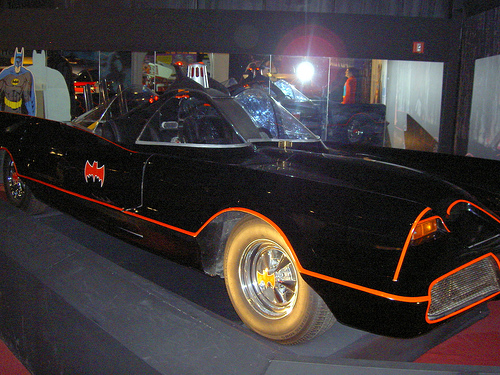
Image from Wikimedia Commons Original Batmobile copyright ABC-TV and DC comics

One of the cardiac surgeons always has the dirtiest car in the lot (He must live on a dirt road or something. We were there on the weekend and he mentioned that he's going to have to find out who wrote something in the dirty back window with their finger.
What did they write on the window of the surgeon who does the most tranpslants/VADs(ventricular assist devices) at our hospital?
VADMOBILE
Hilarious... (to me anyway)
Sunday, August 17, 2008
Web logs
I try to add links to blogs that link to mine, etc.
I use the free version so it doesn't tell me much.
But there's some interesting stuff.
- Links from several other medical blogs
- Many google searches for things:
- Some medically related stuff, especially related to anesthesia
"abdominal surgery" "cooling down on pressors medication" "scar tissue sternum" "difficult airway box" - "what does it mean when a doctor says a pt is a very poor historian"
see 7/16/2007 Poor historian - People who are sleepy
"i'm sleepy" "I'm sleepy the entire day" "How not to be so sleepy" "at work so sleepy" "I'm at work and so sleepy" "Why am I so sleepy" "I'm sleepy what to do" "why am i so sleepy all of the time" "im so sleepy all the time why is this" "so so sleepy"
So some of these people may be looking for my blog (I don't know why they would) but I'm guessing there are lots of people out there who don't sleep well. There are many medical reasons for this. You should look on the web (which you are trying to do I know...)
Here's a short list from my limited experience in the field (I'm not a sleep expert. This is not a medical diagnosis. Go see your doctor.):- Not enough sleep (at least 8 hours a day)
- Poor sleep environment (Not dark enough, too loud, pets, children etc...)
- Sleep apnea (A medical condition where you stop breathing when you sleep. The body wakes itself so you will breathe. Can be treated. Makes a huge difference. I know!)
- Excessive caffeine and stimulant ingestion (including nicotine. I know someone who if they drink caffeine after 2-3pm can't sleep at all)
- Thyroid hormone deficiency
- Other medical conditions
- Medication side effects
- Not enough sleep (at least 8 hours a day)
- Always some links to some of my random images that I've "borrowed" from the rest of the net.
"necktie.jpg" "ferret.jpg" "gastroscope.jpg" "heartvessels.gif" - "book called shock of your life"
I have no idea, but here you go... Shock of your life by Adrian Holloway Go for it, it's only 11 bucks.
- Some medically related stuff, especially related to anesthesia
Sunday, August 10, 2008
Gah!
When I supervise residents or CRNAs I am responsible for their actions...
...regardless of whether or not I am aware of them.
The case was managed correctly.
I didn't know about significant blood loss until I was informed by another anesthesia provider.
Wouldn't have done anything different, would have liked to know about it.
Wednesday, July 02, 2008
Helpless
I heard a bit of a commotion. Apparently a young girl fell to the ground off a seat and her mom and little brother were screaming and crying (respectively). I rushed over because it didn't look like anyone was really helping (though there was a small crowd gathered). The girl seemed unresponsive.... I felt for a pulse and put my ear to her back to see if she was breathing... she was. I asked the mother what happened... she said it looked like she had a seizure, though she was a healthy kid and never been sick in her life. I made sure someone had called 911 and really didn't know what to do next. I'm pretty used to dealing with rough situations in the operating rooms, but in a restaurant I have no equipment, no IV, no drugs, not even any monitors other than my own senses....
The bartender came over and said he was also an EMT (Emergency Medical Technician) I let him take over, some other doctor came over, but I didn't catch what kind of doctor she was. I let him step in because I figured he was used to those situations, and besides she was breathing and had a pulse so I really didn't think i would do anything different otherwise.
I hovered a bit until the ambulance arrived and she seemed to be waking up a bit.
The rest of the evening was uneventful, but I couldn't help but wonder if she was okay, and also knowing my own weaknesses outside my usual work environment.
Wednesday, June 18, 2008
Time Out Day

Image taken without permission from Benches.com
Apparently it's National Time Out Day...
No we don't have a bunch of rowdy 6-year-olds in the hospital (though it seems that way sometimes)
It's a partnership of the Council on Surgical and Perioperative Saftey and the Joint Commision, and other organizations such as the American Society of Anesthesiologists and the Association of periOperative Registered Nurses, among other groups to improve safety in the operating rooms and prevent wrong site and wrong side surgery. (There have been several tragic cases of the wrong limb being amputated... etc. gah!)
For some reason National Time Out Day was June 25th in 2004, June 22 in 2005, June 21 in 2006 and June 20 in 2007. Really it's National Time Out Day-somewhere-in-middle-to-end-of-June. Guess you couldn't really have it fall on the weekend, the effect would be lost.
Anyway the chocolate bars with a timeout card and whistle were an odd touch... but who doesn't like chocolate.
Saturday, May 03, 2008
Epidural testing
Epidurals are small catheters that go into the space right outside the spinal cord. We give local anesthetic solution through them and it numbs up portions of the body. They are useful for controlling surgical and labor pain. We test them to make sure they are working well. One way is to use a piece of ice and see if the patient can feel the coolness. The other is to use a "sophisticated testing device" called a toothpick to see if they can feel pain sensation.
We finished putting in the epidural and I asked the resident to test the patient. She was testing areas and the patient was amazed that she could not feel the toothpick at all...
"Give me that..." she grabbed the toothpick and started jabbing herself in the side. "Wow" Somehow she believed that we weren't actually poking her with the toothpick.
It's the first time I had a patient test themselves.
The epidural was working.
The patient decided to take the toothpick home. She gave it to her husband. "Don't throw that away... and don't use it."
Wednesday, March 05, 2008
Helicopter
I hear helicopters in the background. Not so long ago, as a child, I often looked up in excitement at the incredible speed, power and agility of such magnificent machines. Now more often than not (even when I'm not at work) I hear that engine noise and I think... work
Saturday, March 01, 2008
soaked to the skin III
Usually this is (relatively) easy. You use a sternal saw and cut through the sternum. (middle of the chest where the ribs come together).
In this case it was more difficult. He's had cardiac surgery before. Which means they've already sawn (sawed?) through his sternum in the past. This is problematic because there's sometimes lots of scar tissue there now, so if you try to get in through the sternum quickly, you make have to go through scar tissue. And in that scar the patient's aorta, which is the biggest artery in the body, may be scarred together. The other option is to go in through the side of the rib cage. Since he hadn't had any surgery on his chest from the side, there's less chance of scar tissue and bleeding.
Now, the next scene is as close as you may see to a medical drama on TV. Usually as a medical professional you say "Naw that never happens!" and you criticize the accuracy of things on TV. But, now they tilt him to the side, the surgeon throws on sterile gloves, no gown, and starts cutting though the side of the chest to get to the sac around the heart. He's got blood all over his arms, he's calling to have someone page one of his partners to help him out. In the meantime, I'm giving him lots of medication to keep his heart pumping(pressors), because now it's squeezed down from the blood on the outside of it.
His partner shows up. also throws on sterile gloves, no gown. The nurses are checking blood and giving it. All of a sudden, the blood pressure shoots up to 3 times normal.... They've relieved the pressure around the heart by opening up the pericardium. Now the heart has no more pressure around it and all the medication that we're giving to help the heart squeeze is working too....
But now there's bleeding all around the heart... they need to look for the hole that caused the blood to escape the heart and fill up the pericardial sac in the first place. It's dark in the EP lab, because most of the procedures are done looking at video monitors. Even with all the lights on it's dark in there. At this point they've fillup a whole suction container with blood (1.5 liters) we're giving blood. they're a good way towards filling a second. He asks for a certain kind of stitch... of course they don't have it in EP lab. Why would they need a cardiac surgery stitch. he puts his finger over what he thinks is the hole and yells to have them call up to the OR and get the stitches he needs. I yell to have them call up also and have them get a cardiac OR ready. I assume we'll need to go up there eventually, if we make it.
He finally gets the stitch he needs... puts in a couple more.... still bleeding from around the heart, now there's some bleeding from there entry into the chest too. "I don't know how we're gonna get this guy upstairs" he says. A couple of more stitches, some more blood given, more pressors given. he finally decides that he's got some marginal control of the bleeding and to pack some pads around the heart, to hopefully place pressure on the hole and give us a chance to get up to the OR where the proper equipment and help can be used. The pads go in, 2 stitches to hold the rib cage closed, and a big sheet of sticky plastic (think medical grade iodine impregnated contact paper) to keep the area, marginally clean. I'm a bit surprised we've managed to keep him alive this far.
We roll the patient over to get him over to a stretcher. This is what starts the soaking of my clothes. we get him moved over. we rush to the elevator and up to the OR. It takes several minutes to get up there, we're giving blood and pressors like crazy. we need to position the patient on the side more properly so he has better access to the side of the chest than he did downstairs.
I help roll the patient again, i'm leaning over the wound and it's starting to well up around the plastic sheet. now it's leaking over me, warm. I can't stop, because I know this guy's going to die, and I can't let it be my fault. We finally get organized and they're prepping the patient to go back into the chest.
we're sort of stable now on lots of pressors, but giving a little less blood... until they open up the plastic.... blood starts gushing out again. we scramble a bit. One of the other cardiac anesthesiologists shows up, asks if I need a hand. I ask him if he can help the residents out so I can change.
I scurry down the hall, my belly and crotch covered mostly in blood. I must be a sight. I go to my office, take my scrubs off, my underwear is bloody too. yuk. Luckily I have a clean pair if my office (for call nights) I go wash my hands and I'm back in the OR.
Twenty minutes later, the surgeons can't find the hole, and they're bleeding from all around the heart and incision and multiple transfusions and medications later the man's 80+ year old heart gives up.
I ask the resident if she's okay to tidy on her own and we all walk out of the operating room defeated.
Unfortunately we can't win them all.
Monday, February 18, 2008
soaked to the skin II
So they're doing CPR on the patient. I went up to the anesthesiologist and asked what was going on. Apparently they were doing an ablation in the ventricle and they had starting getting low blood pressure during the case, then a cardiac arrest.
Now you see some people have irregular rhythms in their hearts. Usually these are cause for little areas of abnormal tissue in the heart, they can burn these areas and usually the irregular rhythms will go away. This is called an ablation. Sometimes they burn through too much and they can get into trouble. It's known to happen, but usually rare.
The problem they have here is now they have a hole in the heart and it starts to bleed. That in and of itself isn't great, but the main problem is that the heart sits in a little sac of tissue called the pericardium (literally "around the heart"). Once it's full of blood, if you have continued bleeding it starts to compress the heart and the compressed heart can no longer fill and pump blood. This causes low blood pressure and eventally cardiac arrest. This is called cardiac tamponade. The way to fix this is to open up the pericardial sac and let the blood from around the heart out, then it can again fill and pump blood. The problem with this is that you still have bleeding and now it's not just limited to the pericardium, but can continue to bleed.
More later...
Thursday, February 07, 2008
soaked the skin
No I didn't soil myself because the case scared the heck out of me because it did, but I was covered in blood from moving the patient on to the bed.
I'm on call today and I was headed down to the Electropysiology (EP) lab to relieve the anesthesiologist down there so he could go home. I'm poking around looking to find out which room he's in. I pop my head in one room, I see a CRNA... have you seen Dr. X? Oh he was just here but he's probably next door... they're having trouble.
Hmm... that's not a good sign. I go into the room and usually the room is dark and quiet, the patient is on the bed under light sedation... they're usually pretty sick, but generally unexciting. Anyway... I go into the room, there's a ton on noise and they're doing chest compressions (CPR) A cardiac surgeon is standing near the bedside and they're pulling out surgical equipment.
(More later)
Tuesday, January 29, 2008
Stat!
Hmm.... not good. usually.
This is an alarm system we have so if there's anesthesia emergency and the staff is not in the room, the resident or a nurse can call overhead on the speakers and everyone available can come to the room to help whomever is in there.
Sometimes it's only a false alarm, the patient's oxygen level is reading a little low and the resident gets a little worried.
Sometimes it's much worse.
"Staff stat to OR Z"
I shuffle quickly over there.
I walk in, they are doing chest compressions. Apparently the patient "crashed" about 10 minutes after the start of the case.... low blood pressure of uncertain origin, didn't improve with treatment at all so they started CPR (Cardio Pulmonary Rescusitation). Emergency drugs were given.... epinephrine, atropine, all the good stuff.
After about 15 more minutes after I arrived, they called it, meaning they pronounced the patient dead, all attempts unsuccessful to resuscitate failed. The anesthesia staff in charge of the case don't know what the issue was... the patient was "relatively" healthy. Definitely will need an autopsy to see if anything obvious shows up.
Anyway, we all shuffle out, mostly feeling defeated a little.
Ten minutes later,
"Staff stat to OR 10"
Weren't we just in there?
I head back over there. They're doing chest compressions again.... apparently they were cleaning up the room and filling out the death packet and they saw some rhythm on the monitor so they felt they should give it another shot. Although in the meantime, they hadn't been ventilating the patient or watching the patient since she were pronounced dead. (why would they?)
We persisted a few minutes and then we all decided that it was probably futile... some sort of agonal near death heart reflex (which often happens).
We all left the room again... though not before I disconnected the monitor.
Sadly we can't win them all.
Friday, January 18, 2008
Computers down!
Went to a doctors appointment today. I usually go at 8am. The doctors tend to run behind and if I'm the 1st patient of the day they can't be behind. Anyway, the doors are usually unlocked at 7:45 or so. I pull up and there are three or four people milling around the door. At about 8 they open the door. I walk in and try to check in. Apparently the computers and phones were down. They couldn't check me in, they couldn't put me in a room. Fifteen minutes later, they put me in a room and found some forms to manually check me in. The doctor comes in a few minutes later, he's obviously flustered.
How are you doing? Did they check your sugar today? No of course not, the computer would have told them to do that. Sorry we have no chart, we're all paperless now. What was your last Hgb A1C? your memory is better than mine... an altogether unsettling visit. He's a really good doctor and actually remembered a lot off the top of his head.
Funny how relient we are on computers in the medical field these days. I know I couldn't do my job very well without a computer
Oh, Happy New Year
Sunday, December 09, 2007
Sick
I was in charge of making sure rooms in our building were assigned to residents and faculty the other day. This includes assigning where add on cases go and making sure people get breaks and lunches and relieved at the end of the day.
One of the residents came up to me and told me he might need extra breaks because he's been having some "GI (gastrointestinal) problems" and been running to the bathroom. He said he was probably going to the emergency room after work because it had been going on for five days or so.
Yikes! A few minutes later his faculty came up to me and said his resident looked terrible and diaphoretic (sweaty) and should be sent home. I agreed and called over to the main building to see if there was someone extra to send over.
I went to his OR and told him we were sending someone over to relieve him. He protested and wanted to stay. "This is an interesting case, and I need my vascular cases"
I said, "If you need to go to the ER after work, you need to go to the ER now. You can't get your vascular cases if you fall over. You can always come back if you're okay"
He finally agreed and he was sent home. I think he didn't need to be admitted to the hospital, but earned himself a CT scan and lots of blood tests.
A couple days later, a (different) resident popped into my office.
"You in charge?"
"No, why"
"I just threw up I think i need to go home"
"Fair enough Dr. X is in charge... he just walked past here"
I went out to the break area a few minutes later.
I overheard, "X looked terrible"
"I heard she threw up"
"She must be pregnant"
Laughter from the guys. "No think she's actually sick, she looks terrible"
She walked back by, looking annoyed "I'm NOT pregnant"
Friday, November 23, 2007
Shock of your life
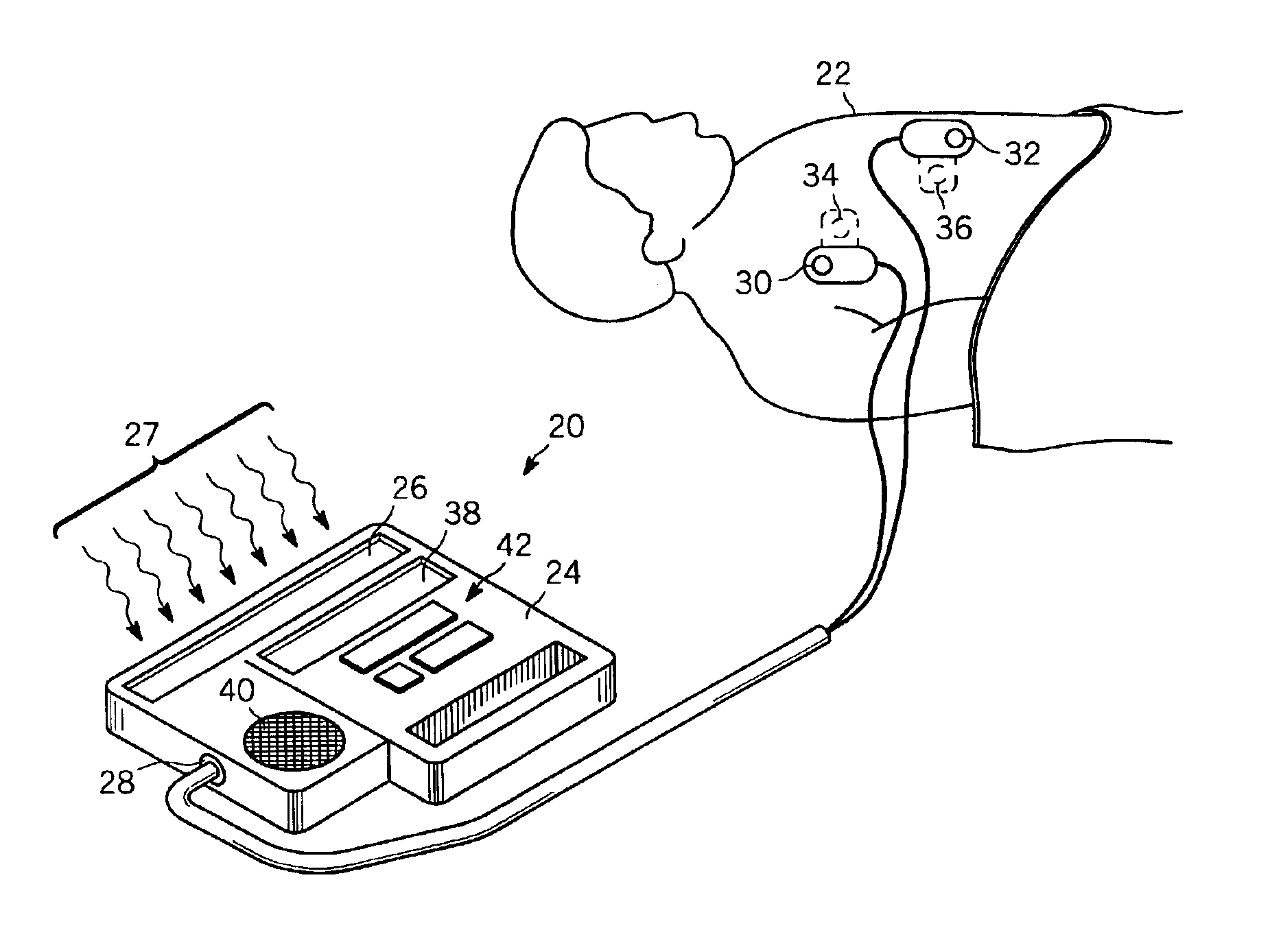
Image used without permission from freepatentsonline.com
I'm staffing a case down in the Electophysiology (EP) lab. Here is where the cardiologists look at the heart from the inside and do various procedures to help fix conduction abnormalities in the heart. They implant defibrillators and pacemakers in the EP labs.
There was a young man on the table, we were getting ready to sedate him for a procedure for an irregular heartbeat. Our anesthesia monitors were being put on and I was looking at the chart. All of a sudden I saw the patient jump up... I thought he was trying to crawl off the bed. Then someone started apologizing....
Apparently she was testing the external defibrillator. This is the device used to put a shock through a patient's chest to put it his/her heart back into a regular rhythm if it goes into a dangerous rhythm. You see this all the time on ER and Grays Anatomy and such. Anyway during this procedures where we are trying to cure these rhythms there is a high likely hood of putting a patient into one of these dangerous rhythms. So as a precaution they always have the external defibrillator in the room and two electrode patches on the patient. In this case during the test of the device someone had already hooked it up to the patient. So this patient got quite a nasty shock. He shook his head like he was stunned and said he was alright three or four times... all the staff were really apologetic.
This would have been a little amusing to me except for the fact that when a person is in a "normal" heart rhythm, shocking them may put them into a dangerous one that is life threatening.
Glad it wasn't me though
Friday, October 12, 2007
Neck mobility
In anesthesia there are markers to predict or at least suggest it may be difficult to place a breathing tube in someone. These include mouth opening, dentition, mallampatti score, which assesses the favorablity of the anatomy of the oral cavity (i.e. mouth), hyoid to mentum distance (essentially chin size), neck thickness/anatomy, neck extension and flexion. No one predictor predicts a difficult intubation, but together they form a picture of how easy or difficult you think it might be.
Someone with very limited neck movement would be very difficult to visualize the vocal cords generally, so I was worried a bit in this case. Apparently he had had two surgeries in the past six months with no problems and the anesthesiologists had not told him anything about his airway. So just to be sure I requested the anesthesia record from the other hospital.
It was your standard anesthesia record, with lots of checkboxes for standard things that you do in the operating room.
whoa.... wait a minute. it was an easy intubation, but he/she wasn't able to visualize the vocal cords?
So now I flip through the rest of the records... no note about the airway at all, or being difficult or anything. I have to now doubt the accuracy of this whole chart now.... How can I trust that he was a easy mask ventition if she/he was willing to describe the blind intubation is easy.
Enough to drive you crazy.
Thursday, October 11, 2007
Perioperative Guidelines
nope.
I went to the printer and it was still printing and it was neverending.
82 pages!
Yikes... I know it's a complex topic, and I need to know them.
6 pages down... 76 more to read... i think some of them are references though... maybe only 70 pages...
Wednesday, October 03, 2007
Hand Sanitizer
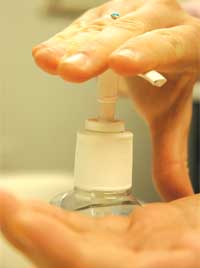
Image used without permission from childrenshospital.org
Just got a message on my pager.
I accidentally contaminated the sterile field with [brand deleted hand sanitizer] ( that went out of control) --[resident name deleted]
Our hospital has gone to having alcohol based hand sanitizer everywhere, to decrease the spread of infection... there's one on the side of the anesthesia cart. Apparently, the spout had gotten clogged a bit and when she went to pump some on her hands it squirted sideways and hit two people scrubbed-in and the corner of the instrument table... and we're doing a descending thoracic aneurysm repair and they're often super-paranoid (rightfully) so that the artificial graft material doesn't get infected.
Didn't seem the surgeon had flipped out though... probably due to the fact that it's 62% alcohol and probably made the surgical field cleaner.
You can't make this stuff up.
Friday, September 28, 2007
Locked out
I was on call yesterday and there was a fire drill going on so the fire alarms were going off... i was headed to the ORs to wake up a patient with one of the residents and I swiped my ID at the OR doors... Nothing... no click, just blinking lights on the pad. I swiped my ID again. Same. So I pulled on the door. still locked no way to open it. Luckily someone was exiting the locker room and I got in there and cut into the ORs. This happened on one other occasion with a different door soon after the opening of our new addition, which I chalked up to being in a new building. I don't know if this is the case with any other doors, but I'm guessing it is.
This is a serious problem. Luckily I was going to a routine wake-up with a good resident and I wasn't really needed. But we need to get into the ORs, or really anywhere in the hospital where we are needed regardless of whether a fire drill is happening or not, or a real fire, or if the building is falling down. This goes the same for the residents who may be running to a code or emergent airway.
Excuse me while I spend the next half hour composing a coherent email to the higher-ups
Monday, September 24, 2007
Fat
One of my rare days now where I'm not doing cardiac or thoracic cases.
The patient had a Body Mass Index (BMI= weight in kg/ [height in meters]squared) of 78! Overweight is above 25, obese above 30. It's a little conservative in my opinion, but this is ridiculous. He was 5 foot 6 or so, and above 220kg. (~500 lbs) fortunately he was here for gastric bypass surgery.
When they're this big, you worry if you're able to get IV access, establish the airway, and whether the surgeons will have difficulty with the procedure.
Anyway, after we put the patient to asleep and intubated him the attending surgeon asked:
"How did you know that would be easy?"
My reply, "I didn't."
I moved along into how we examine the patient and the markers we look for that predict difficulty (or lack thereof)
Luckily no problems.
I did have salad for lunch... I need to work on my own BMI.
Tuesday, September 18, 2007
Sad
"Well it took you about 30 minutes... that's not too bad."
"Minus stopping for air..."
"You were that winded?"
"... Air... for the tires."
I must be more out of shape than I thought.
Thursday, September 06, 2007
Poop
Tuesday, September 04, 2007
Abdominal surgery
Friday, July 27, 2007
Mini Mall
I'm in clinic today. On her history form she has written "mini mall seizures".
I usually shop at mini-malls, but I think she means petit-mal seizures. These are also known as absence seizures and not associated with jerking motions.
Monday, July 16, 2007
Poor historian
Now for non-medical types, this doesn't mean she didn't know that Washington crossed the Delaware. It means that she's a terrible reporter of her own medical history. For different patients it means different things. To some it means that they can't remember what they've had done in the past or what medical conditions they have. To others it means that they ramble on so much it's hard to separate the medical information from random stories about their puppy. And my favorite group is the group where they're so vague about things that it takes 14 follow-up questions to get what you want from them.
"So how bad has your heart failure been" (Looking at the chart with 6 heart failure meds on.)
"Oh I don't really have heart failure"
"Hmm... really. Can you climb a flight of stairs?" (I don't care if she has stairs in her house, I just want to know if she can tolerate minor exercise)
"Oh I don't really climb stairs with my back and all" (Meaning she can't do it)
"How about walking, how far can you walk?" (Easier than stairs)
"Oh not far..."
"Do you ever get chest pain or shortness of breath?"
"Well not really.... well only if I walk too far." (Meaning yes all the time)
(inside) *sigh*
So I look again through the notes. There's a note from the Primary care provider (PCP) "Will stress before surgery." Now someone there has a good idea. Good to know if this lack of function is due to her heart or her back before we possibly kill her in the operating room.
I flip to the studies. I see a non-stress echocardiogram (essentially a heart ultrasound picture) from five months ago showing diastolic dysfunction. And a stress echocardiogram (same pictures, but while giving a chemical to stress the heart) from last month. "Indeterminate. Study cancelled due to hypertensive response." So they cancelled the stress in the middle because her blood pressure got too high. Fine. What did they do about that. I see another non-stress echocardiogram from two weeks ago. Hmm.... curious. So the stress was unable to be done, so they repeated a test that DIDN'T stress the heart, and had results we ALREADY knew about.
So it's six days til her surgery, I have a patient with known heart failure, maybe shortness of breath, maybe chest pain, two non-stress tests, and an indeterminate stress test. Someone also has decided before me that a stress would be a good idea, but never really followed through. So I have six days (including two weekend days) to get her stressed (a different type of stress test) or cancel the surgery. Luckily the ladies out front (the wonderful office staff) are able to get her scheduled for early next week. I cross my fingers and let her go.
The intern asks me what happens if the stress is positive next week. Good question. If it's negative, then I'm just a worry-wort and paranoid about nothing but she should get her back fixed. If not, then they need to evaluate her to see if anything can be done to optimize her heart before her elective surgery. This may mean changing her medications, or performing a heart catheterization, or more.
Did I tell you I love clinic?
Monday, July 02, 2007
Study Says Chatty Doctors Forget Patients
Funny... except for the patients. Published in the Archives of Internal Medicine via the New York Times
Sunday, July 01, 2007
Playing Doctor
Not that an anesthesiologist isn't a real doctor, but it's not immediately what comes to mind when you say doctor.
My friend volunteers at a free county medical clinic run by medical students some weekends. The medical students see patients and are staffed by physicians from the community. They were running short of physicians this week so I offered my services.
It was a little different than my usual Saturday morning, but a little fun nonetheless. I only had to ask a few questions to the "real" doctors.
A lot of me saying to medical students "just warning you... I'm an anesthesiologist."
Thursday, June 14, 2007
Staffing shortage
Yesterday, we had an urgent case to start. No residents or CRNAs were available since it was a lecture day and the available people were giving breaks so other people could go to their lectures.
Anyway they had an available OR, and I myself was giving lunch breaks....
So I just went ahead a did the case myself.
I know this doesn't sound too strange to most of you. It's probably the norm in most places. But being at an academic institution I haven't done a case by myself, well ever. In the few years I've been staffing, I always work with a resident or CRNA. Before then I was a resident so I worked with a faculty member supervising me.
It's nice knowing you have your stuff together well enough that you can do a case by yourself at a moments notice.
Yay me.
Tuesday, June 12, 2007
Preop Hijinks
Now I've done this before too, but usually it's in my bedroom before I go to work or if I'm in the bathroom or if I'm alone somewhere with no hope of someone walking in.
Weird and unsettling.
I just acted like nothing was happening and averted my gaze.
Wednesday, June 06, 2007
Condolences
Condolences to the families of the two doctors, two organ donation specialists, and two pilots.
They perished in the quest to save the life of another.
Monday, June 04, 2007
Tragedy
Go home, kiss your wife or husband, boyfriend or girlfriend, hug your children.
You never know when it's the last time.
More later... maybe
Saturday, June 02, 2007
Tuberculosis
First, Tuberculosis. It's a difficult disease to treat... months of antibiotics are required in most instances, and usually more than one type of antibiotic. Because people generally feel fine when they have this diagnosis they often quit taking the medication. This leads to more drug resistance.
I find a few things very funny about the case.
1. He's a personal injury lawyer. If someone else had done this I bet he'd be on TV advertising for people to call him to get their "rightful settlement"
2. His new father-in-law... works for the Centers for Disease Control. Speciality -- tuberculosis. You can't make this stuff up.
3. His name came up when he crossed the border from Canada. "including instructions to hold the traveler, don a protective mask in dealing with him, and telephone health authorities." The border inspector ignored these warnings because they appeared discretionary and the man appeared healthy. Good to know the system works. Good thing he's wasn't a terrorist. I imagine if he had been of middle eastern ethnicity he would have been face down handcuffed in a ditch in twelve seconds.
I'll give the guy some credit. He's probably not extremely infective from what I know about TB. He wasn't coughing, he probably didn't have an acute infection. He also picked it up somewhere long ago. And it was just recently found on an xray for something unrelated.
But also some problems.
1. He states he didn't know the risk of what he was doing, but when he was told not to come home he went to extreme pains to get home. He flew from Atlanta to Greece for his wedding, warned not to travel. Then flew to Rome, Italy. Warned again not travel. Then got to Prague, Hungary flew to Montreal, Canada then drove across the border to avoid authorities. Sounds like someone deliberately trying to skirt the system.
2. I'd hate to miss my wedding and honeymoon. But questions are now arising to whether a wedding took place. One article states "There was no wedding. They came for a marriage but they did not have the required papers." Good planning on his part. If I was the prospective bride I'd be pissed off.
Thursday, May 31, 2007
Keywords
I'm anal enough that I'm going back and adding keywords to all my old posts. Hope this makes reading more enjoyable.
(I'm assuming people are reading)
Wednesday, May 30, 2007
Random walls

I'm walking out of work late yesterday. I'm tired. I'm on cardiac call i've been here for 12 hours. Not bad hour-wise but i've had to work with one of the stressful surgeons and just finished helping code a patient in the operating room.
I just want to go home and put up my feet...
All of a sudden there's a wall along the corridor where I usually walk out. It was open this morning
"Detour -->" I guess they're finally connecting the new building to the old one.
Now I wander through the basement and finally get to my car.
Perfect ending to a long day. Hope I don't get called back in.
Friday, May 11, 2007
Yay!
I passed!
It's about a week and half earlier then they said scores would be up, but I'm glad.
Relief.
Tuesday, April 24, 2007
Oral Boards - Done
Yay!
Topics were anticipated. Did I study enough, hard to say... would studying more been more helpful... doubtful.
I think I did okay... but who knows for sure. I'll find out at the end of May.
At least it's over, for now.
Monday, April 23, 2007
Transvaginal Cholecystecytomy
These words together mean removal of the gallbladder through the vagina.
Yuk yuk yuk.
If I had a vagina, you're not removing my gallbladder through it.
And to boot there's a Natural Orifice Surgery Consortium for Assessment and Research.
You can leave my natural orifices alone... I mean look what great scientific advances there are in this decade.
New York Times online via Book of Joe
Monday, April 16, 2007
DC in the spring

Blossoms on the trees.
Spring is in the air...
NO!
I'm in DC for anesthesia oral board exams
Its 40 degrees outside.
There's a wind advisory...
The plane was shaking like a laundry dryer as we were landing... and I swear we were going sideways for several seconds.
AND I'm taking oral boards tomorrow.
I'm a little stressed
I'm back to the books for last minute cramming... maybe a short nap.
More later.
Monday, March 12, 2007
Drug interactions
I said I didn't think so. The narcotic has lots of interations, but not likely with albuterol. "Why?" I asked.
"Well she saw this Law and Order where this girl poisoned her mom with darvocet and albuterol."
Hmm... Law and order? "You sure that wasn't darvocet and ALCOHol not ALBUTERol?"
"Hmm... yeah probably, see ya bye!"
I guess it's all in the details.
Monday, February 26, 2007
Clinic
(no offense to those who are actually suicidal)
Sunday, January 14, 2007
Room temperature
We were doing a big cardiac case under left heart bypass -- where part of the blood is taken after it gets passed through the lungs, and rerouted to the femoral artery in the groin so that work can be done to the descending aorta with most of the blood flow being perserved. This is nice so that damage to important organs like the kidneys and intestines can be limited.
Since we have less control over temperature because it's only partial bypass, we had the room temperature way up. It was warm for me, but must have been killer for the surgeons who were wearing waterproof gowns, etc.
On of the attending surgeons was scrubbed in and asked for temperature to be turned down. He's generally very expressive. "Turn down the temperature or I'll vomit in the wound and the patient will get septic and die!" I just about died laughing...
(For those not in the know... sepsis in a severe systemic infection caused by bacteria. If you vomited into a patient surely this would happen but it's not a scenario you contemplate ... well ever.)
Tuesday, December 05, 2006
Working too hard?
Brr.
Wednesday, November 22, 2006
Sexily dressed doctors may be dangerous
Sexily dressed doctors may be dangerous
First of all, it must be a slow news day. Second of all the first paragraph mentions Grey's anatomy. And we know that all hospitals are like the hospitals on TV.
Sad.
Wednesday, November 08, 2006
A day
Put in a LVAD (left ventricular assist device) in a patient, which is an assist device to help the left side of the heart. Another patient had an RVAD which was a device to help the right side of the heart which we took out. Stressful day though... now doing some general cases while the overnight guy does a heart... what a way to make a living.
Monday, September 04, 2006
high glucose
1)I was up all night teeing up a heart transplant
2)I'm using a different glucometer, the one at work, rather than my usual at home
3)I had Chinese takeout for dinner.
Sadly i suspect It's number three.
Wednesday, August 30, 2006
Being a patient
Now I'm checking my glucose (almost) every morning, supposed to be checking my blood pressure regularly so he can decide if I need an anti-hypertensive medication. My sleep study is scheduled, and I'm making calls to the insurance company to see if things are covered.
I guess I'm a set up for this. Even though I'm in my early 30s, I'm overweight, I eat poorly, diabetes and hypertension run in the family ... let me continue.
I don't think I'll like being a patient.
Sunday, August 13, 2006
Black Cloud
Some say that I have a black cloud. They're wrong. I have a storm cloud following me.
Let me clarify. In the medical profession, (I don't know if this concept exists in other fields) if you attract all the worst, bad, complicated cases, or when you're on call everyone and their mother has to come to the hospital, then you have a black cloud. It's possible to have a white cloud. And sometimes the white cloud cancels out the black cloud.
Anyway, I think the origin of my black cloud was my first day of residency. To sum it up... out of the 2 patients I took care of that day, half of them did not live to see the next day. Not that I was responsible, but it was still traumatic nonetheless. I had patients die the first two times I was on call as an attending physician.
Friday night, this continued. When I came in during the afternoon, here's a partial list of what was left to start -- 3 liver transplants, a heart transplant, and 2 endovascular thoracoabdomical aortic aneurysm repairs in addition to a myriad of other smaller cases. Also on the table was a facial reconstruction that had been going 8 hours so far, an open thoracoabominal aortic aneurysm repair, and liver resection that had lost six liters of blood.
Needless to say I was up all night. Two liver transplants had been finished (I was not responsible for this) the heart transplant also (not me as well, yay) The thoracoabdominal aneurysm finished after 15 hours of work, the facial reconstruction had been going 24 hours with no end in sight, and another ENT reconstruction case had not only finished, but had gone back to the OR 3 times in addition because things didn't look well. At least I was working with good residents and colleagues. It makes things a bit more manageable.
Saturday, July 08, 2006
TEE?
Anyway I was watching Discovery Health (flipping past really... I rarely WATCH it) and there was a cardiologist talking about a test they "rarely" do in the ER. A TEE. A TEE stands for TransEsophageal Echocardiogram. Break it down -- basically a picture of the heart using soundwaves with the probe being in the esophagus (your feeding tube) Then they have the patient talking about it and him being scared and they show a picture of a medical instrument and you're supposed to assume it's a TEE.
BUT IT'S NOT!!!
They show what is probably a gastroscope -- a camera used to see into your stomach. And I can guess why they used that instead. It's kinda like a TEE, almost the same shape, put down the same tube, but more melodramatic because it's got a light at the end of it and they pointed the light into the camera and it faded out to the next scene and ooooh.... aaaaahhhh....
Anyway NOT the same
 | 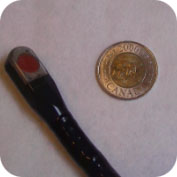 |
| Tip of gastroscope probe | Tip of TEE probe |
| Images used without permission fromFujinon Singapore and St. Michaels Hospital respectively | |
Monday, June 12, 2006
Sixteen Kids?
Tuesday, June 06, 2006
Can't sleep
Wednesday, May 31, 2006
Memorial day weekend
For the first part of it, I worked a full day on Friday... an old lady with three valves that needed to be replaced. Uncharacteristically I got to leave at a reasonable hour... There had been rumors abound about a case to go Saturday morning... in fact I had first heard about "the emergent case for Saturday" on Thursday... so i waited all day on Friday for the surgeons to book it so I could plan my day better for Saturday. All day long... no case booked... everyone from the surgeon's secretary to the surgical PA to the perfusionist had heard that the case was going Saturday "for sure" Still it hadn't been booked by the time I left. I guessed they would page me when it was booked so I could set my alarm etc... imagine my surprise when I woke up Sat morning to no pages. Yipee...
I got about halfway through the day and then decided I would go grocery shopping and buy some food to grill out... steaks, pasta salad, corn, the works... no sooner than I get home from the store. [beepity beep beep] I call the OR front desk. "Type A dissection to arrive at the hosiptal in 30 minutes, Dr. *namedeleted* wanted everyone in" Fine. A Type A dissection is a tear in the first part of the aorta after it leaves the heart. This is an emergency because in that portion of the aorta is the blood vessels that supply the heart itself, and the beginnings of the blood vessels to the head. If this rips further then the heart or brain (respectively) will have no blood supply. Steaks in the fridge... hop in the car. I get the the hospital... perfusion is there, the cardiac nurses are getting there. "Where's the patient?" asks the perfusionist, "Lets get the show on the road" I don't know I think they're being flown in. Okay. Quick call. "They say they're not flying anyone in, but I could be another helicopter service". I find out that the ER doesnt know about the patient, the cardiothoracic resident if fact is at home on the couch because he hadn't heard, and no one knows about the patient. Yikes...
So we're sitting around for 45 minutes waiting for the word, when the surgeon calls in to the room. "She's in the ER, we need to go now". I grab the resident and we head downstairs, I find a woman in her late 20s, slightly tearful. I go through my history with her quickly and explain what's going to happen, she's no longer slightly tearful, but very tearful now. I reassure her and we start wheeling her back.
*time warp*
12 hours later it's 6am and we've just finished her operation. Lots of bleeding, but she's doing fine, I'm exhausted from being up all night. Luckily I get to go home, the resident needs to start an "emergency LVAD that we heard about 2 days ago" Hopefully his staff will let him out for a nap.
I know I need one
Tuesday, May 23, 2006
death in the or
More later... maybe.
Wednesday, April 26, 2006
Administrative Professional's day
Thursday, April 13, 2006
ugh... clinic
no really I don't mind that much, but I never expected to wearing a tie much in anesthiology... maybe a tie made out of scrub material (Hmm that might be funny)
anyway. i'm in pre-op anesthesia clinic. surgeons send us patients so we won't cancel them the day of surgery... so we look at the problems they've overlooked in favor of the surgical repair and we make sure they have nothing that will kill them.(oversimplification... sorry)
anyway for some strange reason the phone has been ringing off the hook today. Really it NEVER rings. Today it's so-and-so from Oto "Have you seen Mr. X yet?" or whoever from Urology "Does Mrs. Y need to come down and see you?"
Argh... I'm busy surfing the net. And seeing the five other patients you just sent down here.
I'll just let resident see them all... it's lunchtime isn't it?
Friday, March 10, 2006
Awareness followup
Hi there,
I stumbled across your blog today and enjoyed reading your post about BIS monitors. I agree -- they DO NOT always work. I experienced awareness during anesthesia just last month, and my doctor was using the monitor.
I lost my baby during my pregnancy and needed a D&C. Unfortunately, my uterus was perforated during the D&C, and so the surgeon performed an emergency laparoscopy to repair the tear. I "woke up" feeling like I couldn't breathe, experiencing intense pain in my naval from the scope, and hearing parts of conversation in the OR around me. I was paralyzed, so I couldn't tell anyone what was happening. But I knew that if my belly was cut, something serious had gone wrong. I honestly thought that I was going to die. I eventually blacked out again for the remainder of the surgery, but have memories from pretty early after extubation (while still in the OR), and have much more recall of the recovery room than seems typical.
It had never occurred to me that something might go wrong with the anesthesia on top of everything else. (I figure that in the "Bizarro universe," my double has just won the lottery.) The only bright spot in this is that I ended up writing the anesthesiologist a letter describing what I experienced. He called me right away and said he was sorry, which was surprisingly helpful for me. He also said that when the perforation occurred, he'd had to quickly switch from using a mask to intubating me. From the details I described, he felt I woke up during that process. He said the BIS monitor lags real-time by at least a minute, and that while they are helpful, they obviously can't prevent all problems.
I do have a question for you: In future surgeries, how detailed does my description of what happend need to be to ensure I don't have awareness while under general anesthesia again? Any tips would be helpful.
My reply:
Sorry about your awful experience, and sorry about the loss of your child. From what I know, the experience you had was one that is typical of people that suffer recall. Generally an emergency happens and anesthetic techniques need to be changed in a hurry, or things are so tenuous, that the risk of recall is weighed against keeping a patient alive. Trauma situations and obstetric situations are classic. I'm glad you had a positive conversation about this with your anesthesiologist. Still must have been a traumatic experience.
As for future surgeries, I think the mention that you had awareness during a D&C converted to a general anesthetic for a laparoscopy, (Just the description you gave me) should be sufficient to avoid any problems. They will probably have you go through your experience so that they can be a better picture of what happened. Some may request a copy of the previous anesthesia record to see exactly what medications you received, but I'm guessing most won't.
I cannot of course promise that this won't ever happen again(you may be resistant to some of our medications) but I'm guessing the urgency of the situation was the main cause of your period of awareness.
Hopefully your future experiences will be more pleasant.
I hate to ask this, but would you mind terribly if I posted an edited redition of your experience on my blog, so that I can post the advice.
Good luck with everything. I'm happy to answer any other questions, sorry for my delay in reply.
Her response:
Hi again,
Thanks for the extra information. And yes, you can post my email(s) to your blog, in whatever edited version you want. I just request that you leave out my name.
The anesthesiologist for my surgery called me back again since I emailed you. He pulled my chart, and what he said matches up closely with what you surmised: Shortly after the lap began, my BP dropped. He administered ephedrine and lightened the anesthesia (propofol, I think he said?) to stabilize me. He believes this is when I initially became aware. He said that BIS readings remained in the 60s throughout the incident, which meant that I should have been out. I guess it just shows how hard it is to categorize levels of consciousness, even with a monitor. As a secondary
issue, he also wonders if I might metabolize Versed faster than normal, which would allow me to remember what happened.
It was a God-awful experience. I honestly thought I was dying, and you don't just immediately shrug off that sort of event afterwards. But, I don't really see how it could have been avoided. After doing some research and talking to both the surgeon and the anesthesiologist about what happened, I'm satisfied I got good care, despite my complications. So I am choosing to lump everything that happened to me -- the baby having trisomy 18 and dying, the uterine perf, and the anesthesia problems -- into the same category, which can be summed up as "sometimes you're lucky in life, and sometimes you are probability's bitch." I wish I'd been lucky.
Anyway, I'm hoping that this was a one-time bad event for me. For any planned surgeries, I'll follow your advice and explain my history as best I can.
Thanks again
This woman has had an awful experience, and has had the heart to share it with us. I think it illustrates that good communication between patients and physicians is of critical importance. It is especially important when "bad" things happen, though it should exist when things go well also.
Monday, February 20, 2006
sorry
Wednesday, February 01, 2006
On call
Tuesday, January 31, 2006
Ludacris
Heard on the radio yesterday:
Jamie Foxx featuring Ludacris -- Unpredictable (luda's verse)
I'll be your Tylenol just take me till you doze off
So Tylenol is acetaminophen whis is a mild analgesic(pain reliever) and an anti-pyretic (fever reducer). So while not actually a sedative... it can relieve your pain enough so you can sleep, or reduce your fever, so you're more comfortable and thus can sleep. I guess Luda's right still.
Monday, January 30, 2006
heart trouble follow up
This means the stents he got last year are still open. Doesn't really explain his minor chest pains. And we learned that I inherit my stubbornness from my dad
Tuesday, January 24, 2006
Heart Trouble part Deux
Anyway. Last year I was all about lifestyle change... exercise, diet modification, etc. Well i'm not exercising, though I do have an exercise machine, my diet is pretty much the same (off and on) we'll see what friday has to show.
Sunday, January 22, 2006
Questions

Lately I've gotten some questions from readers and I thought I'd take the chance to answer some of them. I've been rather delinquent.
Some questions from some one beginning premed studies...
1)Any opinions regarding DO vs MD training particularly as it applies to anesthesiology?
Hmmm... interesting question. I think both avenues are good approaches to medicine, and they don't differ as much as you would thing, allopathic and osteopathic classes are almost the same with a few exceptions. I think in general MD programs give you more choices when you are choosing a what type speciality you want to practice in. I've trained with DOs and done a fellowship with a DO and find so generalities applicable. I will say in particular reference to anethesiology is that it seems to be becoming more competitive as a residency. Thus we are seeing less DO physicians meet the rigorous requirements for interview selection in my facility, but those we do see are amazing candidates. So I would have to say that doing well in school and getting high board scores are the most important requirements.
2) What is your experience with physicians who were non-traditional students (i.e. older -- I am already 30), again with particular reference to anesthesiology?
First of all, I do suggest to all my friends who are considering medicine as a career to reconsider it. It is a tough road with long hours of work and study. It is physically as well as mentally taxing. There are better ways to earn money, influence, and/or respect. Saying all that, if you are one that really wants to be a medical professional, who am I to stop you? I do love my job, but the road to where I am now has been a rough one. I would however do it again.
Next, I don't think being a non-traditional/older student necessarily puts you ate any sort of disadvantage in being selected for a residency program. I think it provides an interesting perspective in the field of medicine. Being older, I think the physical demands of medical training may be more difficult. Also there is more likely to be a family involved. And that has needs of its own. All that is fine though, many people train in the medical field with large families. It just requires more juggling.
Just think though if you're considering anesthesiology at age 30 and start medical school in the next few years you may be 40 or older before even starting to have the opportunity to practice on your own. That time is valuable and it is quite a commitment. In reference to anesthesiology, there are plenty of older residents, some have completed all or a significant portion of another medical residency (anesthesia is a field that is highly switched into), some have just gotten a late start as you have. Also anesthesia is demanding, but may require less time commitment in residency some places, then say other residencies such as surgery (although there are wide spread work hour limitations)
Another question from an electrical engineer.
3) How accurate are the new monitors that are supposed to indicate depth of anesthesia in a patient?
That also is an interesting question. The device you're most likely referring to is the Bis monitor. It's gotten quite a lot of press lately. It's basically a transcutaneous monitor that picks up electric activity from the brain (EEG), performs a complicated "black box" calculation and spits out a number ranging from 100 (awake) to 0(No electrical activity). We do not use this device at our institution. There are several problems that I see. First of all there are plenty of other ways to measure consciousness clinically. The device and disposables are not inexpensive. Also what bothers me the most is that the calculations that are performed by the devices are a proprietary formula, and we are not privy to those aspects. I'm not sure how accurate thes e devices are, but regardless I'm not sure they're necessary. (just one man's opinion) | 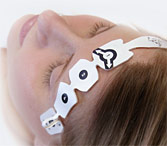 Picture taken without permission from Aspect Medical Systems, Inc. website |
If I missed your question, let me know I'm trying to keep up.
Monday, January 16, 2006
IV starts
Two nights ago one of my roomies went on a bit of bender and thus couldn't keep any food or water down yesterday. I started an IV on her at home, instead of her going to the ER and waiting for hours and having the same thing done, except with a large bill.
Today near the end of the day one of my residents requested I put an IV in her because she wasn't feeling well and had some sort of flu bug... I was going to put in for her to go home early, but she was relieved by a late resident anyway. What a trooper.
Anyway, wonders that a couple liters of fluid will do to help with how you're feeling.
Tuesday, January 10, 2006
More anniversary stats from the last year
Longest time between posts: 17 days
Sunday, January 08, 2006
Anniversary
I've finished a cardiothoracic anesthesiology fellowship. Started a full time job as a cardiothoracic anesthesiologist. Bought a house.
On the other hand... I am working today on a sunday, doing a semi-emergent (as in booked two days ago) coronary bypass. (well supervising a resident anyway). This after doing a Heartmate II and a heart transplant on Friday, two chest closures yesterday (see friday's cases). At least I have tomorrow off.
Some stats:
365 days.
72 posts.
Avg. 1 post every 5.07 days.
5006 vistors by counter since March 7, 2005 (when I started counting) some of those are me however.
I hope for many more years.
Wednesday, January 04, 2006
Tuesday, January 03, 2006
Readily available
Wednesday, December 21, 2005
Almost one year.
Monday, December 19, 2005
Hmm...
Sunday, December 18, 2005
Christmas Party
Where does one conscience go under anesthesia?
First of all not to nitpick but you probably mean consciousness, meaning sense of one's personal or collective identity, rather than conscience, meaning source of moral or ethical judgement. I only clarify this not to be a jerk, but to make sure we are on the same page.
I don't know if there's really a right answer to this question... First. Is this is the same quesion as "Where does one's consciousness go when I sleep?" Probably in my opinion. Anesthesia is induced sleep (more or less... i can give you a more techically specific definition but that will just be cumbersome in this metaphysical question)
Most would say one's consciousness is just supressed while you sleep or are under anesthesia... it's there but it's unable to express itself or take in new information.
More religious people would say it's there watching over you. A "soul" if you will.
Which is right? I don't know. Is there another alternative? I think the best thing would be to leave it comments and see what people have to say.
Monday, December 05, 2005
Level 1Trauma
Now I'm always kinda pissed off when I get called in... half the time I get called in for cardiac it's nothing critical (i know that sounds weird) Someone freaking out for no reason. I know it's my job to be available when they call me in, so I don't think i should be angry.... I still am. I figured if that bullet were anywhere important they'd be dead by now. I'm also mad for other people too. I think "Heaven forbid if anyone gets hurt driving in the snow coming into the hospital for this non-emergent 'emergency' "
I slip and slide my way in. I see the cardiac surgeon in the pump room. I say "hi, what's going on?" He says "I don't know... they told me she was dying and to come in, now we're waiting... i don't know what doing..." Great now the cardiac surgeon and I both don't know what's happening. Oh well easy enough to blame the Trauma service.
The patient finally shows up. Very stable. We put some invasive monitors and access into the patient. I don't see much blood in the pericardium (sac around the heart) on echo. There is some though... not much. Surgeon says it probably looked like pericardial fat because it was well-organzied clot. They take a closer look at the heart... this lady's lucky. The bullet went through the pericardium nicked the right side of the heart and kept going. A half-centimeter another direction and that nick would have gone through one of the coronary arteries and the patient would have bled to death or part of the heart would have completely stopped working. Lucky.
I feel bad now that I was angry driving in.
Wednesday, November 30, 2005
PACU
Not a typical day for me. I was the faculty covering the post-operative recovery unit. It's actually not a particularly tough job most of the time since there is a resident assigned to field most questions and problems. There's the occasional problem... nothing big today. Staffing ECTs. (electroconvusive therapy) Done three times a week in the PACU. Signing patients out (i.e. administrative whatever-you-want-to-call-it)
One thing that was unusual was that we had two physicians come through as patients. I guess doctors need surgery too. Didn't want to give special treatment, but did stop by and say hi to both the pediatric anesthesiologist and the cardiac surgeon (who spent the previous saturday on a stretcher in the pump room while his partner finished a surgery they had started together).
Tuesday, November 29, 2005
Bladder cancer
I'll be badder without a bladder!
Saturday, November 19, 2005
Tough Day
Anyway... the new heart is in the patient about 3 pm or so. It's not going well as we come off bypass, but we're doing reasonably. All of a sudden, the blood pressure drops and I see a bunch of air on the echocardiogram. Part of the hears stops functioning well... So I assume some air has gone down one of the coronary arteries. We crash back on bypass... Left heart starts functioning a bit better but now the right side doesn't look so well. We end up after struggling a bit assisting the right side of the heart with Abiomed right ventricular assist device. This are settling out, the all of a sudden the left side of the heart is starting to look bad.... Now a discussion ensues on if they need to put the patient on ECMO (extacorporeal membrane oxygenation). Ends up they endup supporting the left side of heart with a left sided Abiomed.
Now we are supporting both sides of the heart, and the patient is relatively stable We're pouring clotting factors and blood so the patient will stop bleeding. They'll try to wean the patient off assistance early next week. So this patient came into the hospital with a bad heart and a Left ventricular assist device... now has a different heart and assistance for both sides of the heart. Only time will tell. By the way it's 9pm we're finally done. a quick 16 hour case. I'm so exhausted.
Sunday, November 13, 2005
Interviews
Friday, November 11, 2005
Make a wish
The reason I remember this kid is that he was truely one in a million. The surgery he was having as an eight year old was a coronary artery bypass. He had a disease called hereditary familial hypercholesterolemia. The problem for this kid was that he had the worst kind. He had cholesterol levels 8 to 10 times what a normal person would have, thus he had premature disease of the arteries feeding his heart. Most patients who have this type of surgery are in their fifties and above.
What killed me was that on the news report they did say he had coronary artery disease, but they said that "Sometimes he doesn't feel well" and left it at that. I guess you can't say "Sometimes his heart doesn't get enough blood" on TV. Well at least he got a new puppy.
Tuesday, November 08, 2005
More Prisoners
Now I understand this guy is a violent criminal, but they bring this guy up to the OR... he's intubated and paralyzed... big wad of bloody bandages on his neck... but despite this fact he still has his arms shackled to his waist. Like he's getting anywhere while he's paralyzed. Then again with the sitting outside the OR while he's under general anesthesia. Oh well. I'm sure the guards are just doing what they're told.
Good news for us, he didn't hit anything too big that we couldn't control the bleeding. (plus they had time to fly him in from up north in the helicopter). Bad news for him... seems like he didn't feel like living anymore.
P.S. I was ending another case with a CRNA and she had only heard part of the story so she only knew we were operating on a self inflicted neck wound. So she said "Life can't be that bad can it?" I then mentioned that he was a prisoner apparently in prison for violent crimes. She then seemed embarrassed "I guess it can be that bad." I chuckled. (proves again -- I'm a bad man)
Tuesday, November 01, 2005
prisoners in the OR
A couple of years ago I had a patient undergoing cardiac surgery he was in his mid-seventies. Apparently he had been in prison for twenty or more years. He was a pretty feeble man... still those guards were there sitting outside the OR for the entire case. I really don't know what he did if he had been in prison for that long. He also seemed very nice.